You can limit Instagram, TikTok and YouTube on your iPhone with Screen Time, no extra app needed. On iOS 27 the tools have new names: Time Allowances instead of App Limits, and the Screen Time Schedule instead of Downtime. Here are the six steps with the real menu names, plus the old ones for iOS 26.
Updated October 2026, following Apple's iPhone User Guide for iOS 27 (Set up Screen Time for yourself, Set schedules and time allowances).
In short
- iOS 27: Time Allowances (formerly App Limits) and Screen Time Schedule (formerly Downtime).
- Without a passcode every limit is a suggestion. Let someone else type it.
- Screen Time blocks whole apps, not single feeds like Reels or Shorts.
What changed in iOS 27
Instead of one limit per app, you work with categories such as Entertainment, Games or Social Media. Time Allowances set how long, Schedules set when. If an app declares an associated website, the allowance covers both (Apple).
| Feature | iOS 27 | iOS 26 |
|---|---|---|
| Daily time budget | Time Allowances | App Limits |
| Set times without apps | Screen Time Schedule | Downtime |
| Exceptions | Always Allowed | Always Allowed |
| Passcode | Manage Screen Time › Lock Screen Time Settings | bottom of Screen Time › Lock Screen Time Settings |
If you share Screen Time with an iPad or Mac, they need their 27 versions too.
How to set app limits on iOS 27
Turn on Screen Time
Open Settings › Screen Time, tap Manage Screen Time, then Turn On App & Website Activity.
Watch your Daily Average for a few days. A good first limit sits a bit below your average, not at zero.
Create a Social Media Time Allowance
In Screen Time, tap Time Allowances, then Manage Categories and the plus button, choose Social Media and set your daily time.
The budget is shared: 30 minutes means 30 minutes for Instagram, TikTok and YouTube combined.
Check which apps the category includes
In Manage Categories, tap Social Media and check which apps are counted in it.
The most common trap: messaging apps can count too. Then at 9 p.m. the family chat goes dark, right when your mom asks what time you're coming tomorrow. Put those apps under Always Allowed in step 5. Reports say iOS 27 also lets you create your own categories (9to5Mac).
Set up a Screen Time Schedule
Tap Screen Time Schedule, turn on Schedule, tap Add Schedule and add time windows without Social Media.
Each window has a name, a start and end time, and the categories it allows. A pattern that works: "Morning" until 9 a.m. and "Evening" after 9 p.m., both without Social Media. Weekends can get their own schedule.
Choose apps and people that are always allowed
Tap Always Allowed and use Add Apps and Add People for anything that should stay reachable.
Family, Maps, banking or work apps make sense. But every app on this list opens anytime, even after the limit.
Lock your settings with a passcode
Tap Manage Screen Time › Lock Screen Time Settings and enter a four-digit passcode twice.
Without a passcode, every limit is a suggestion. It works best when someone else types it, such as your partner, a roommate or a friend (Apple: Screen Time passcode). Passcode recovery with your Apple Account is handy, but also a loophole.
"Ignore Limit": why Screen Time often doesn't hold
When your allowance is used up, the iPhone blocks the apps in that category. Ignore Limit lets you keep going; with a passcode set, hands-on reports say your iPhone asks for it (iGeeksBlog). The budget resets at midnight.
That button decides everything. In a study of about 2,000 adults, limits that couldn't be overridden right away cut time on social apps, the browser and YouTube by 16%, about 22 minutes a day. The authors explicitly contrast this with flexible tools like iOS Screen Time (Allcott, Gentzkow & Song, 2022).
What helps: a passcode you don't know. Or a feed that ends by itself, so you never want to tap Ignore Limit in the first place.
Screen Time with Feedbye: block apps, keep your friends
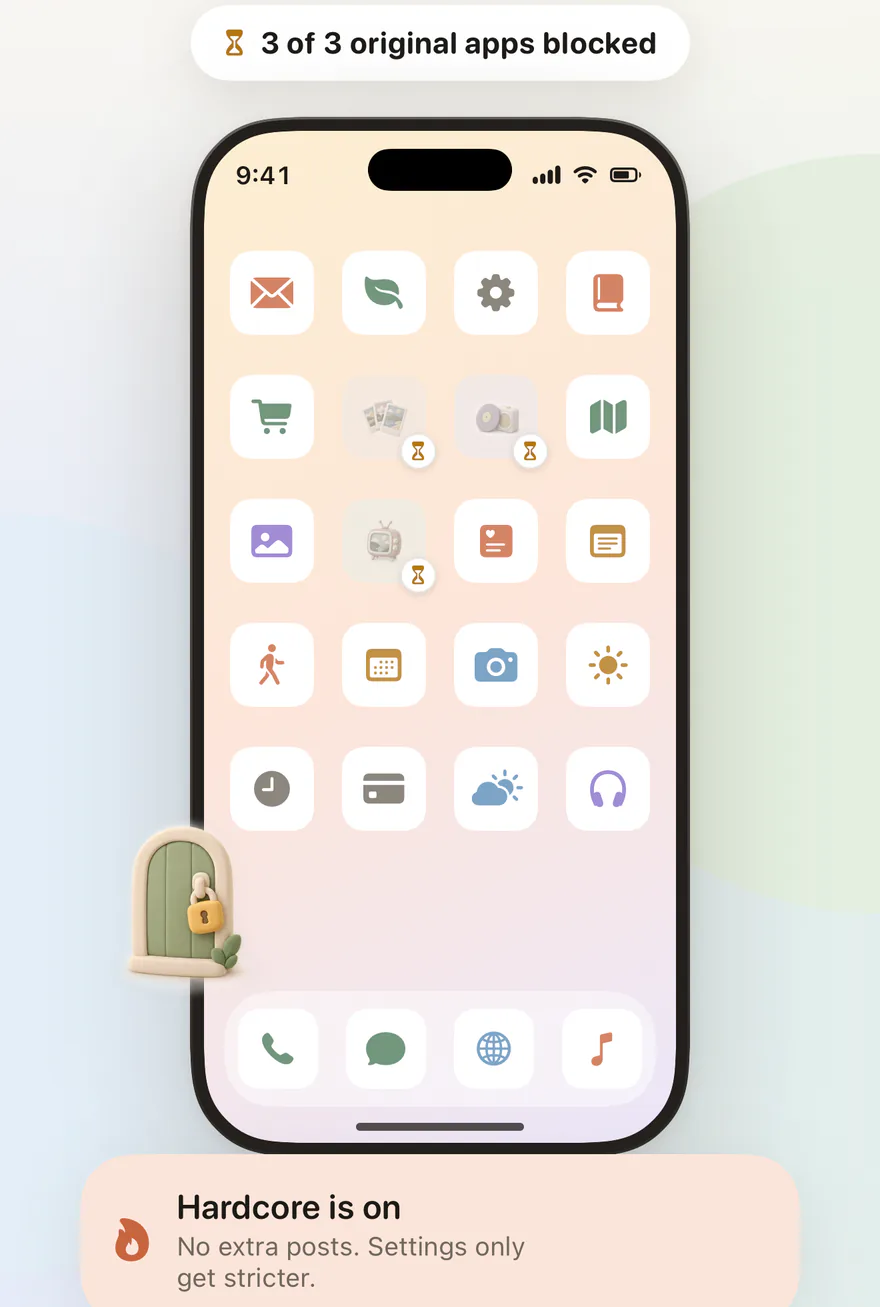
Screen Time has two weak spots: it only knows whole apps, and once the budget is gone, messages and Stories go too. Feedbye, our iPhone app, uses Apple's Screen Time the other way around. You block the original apps and use Instagram, YouTube, TikTok, Threads, X and Facebook in Feedbye, without Reels, Shorts and For You.
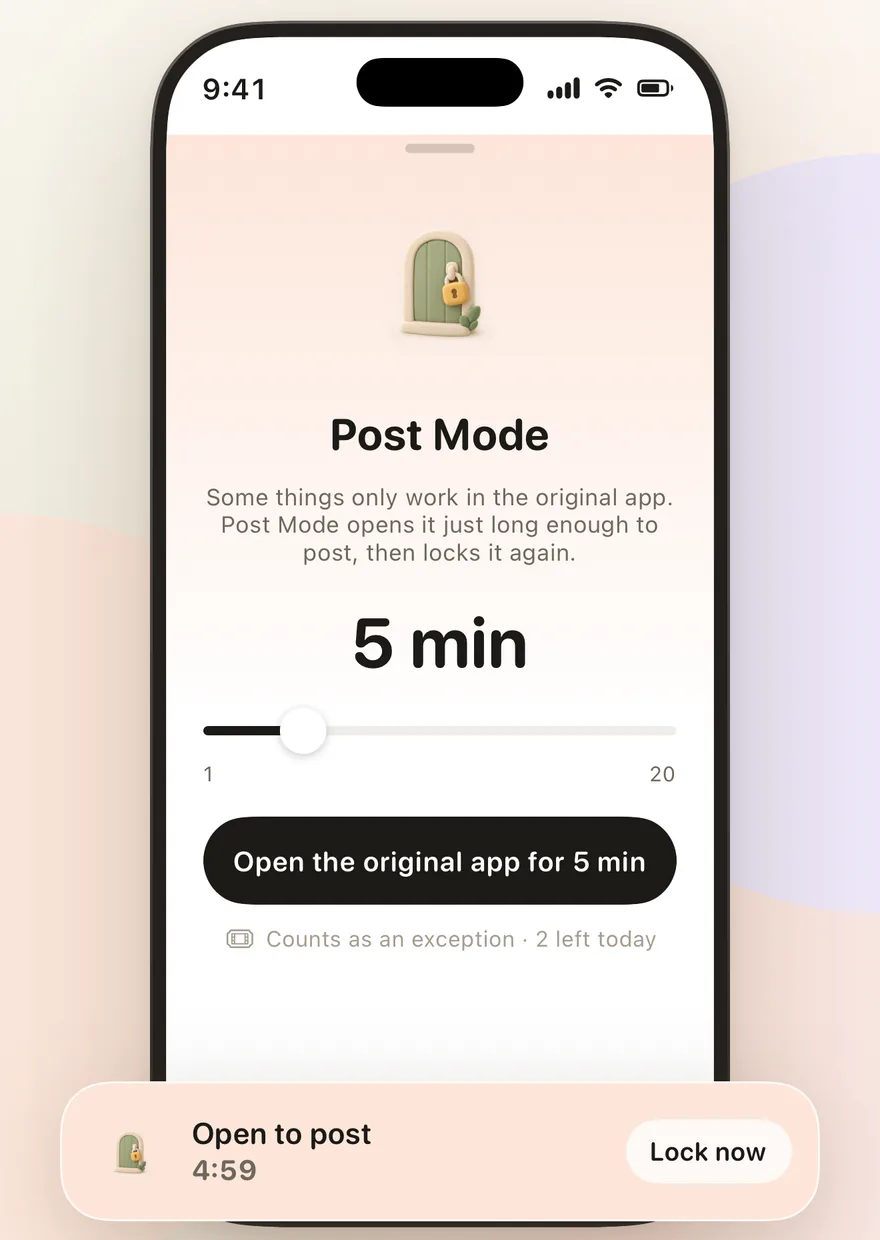
There, every feed has a daily limit, say 10 posts, with three exceptions a day. When you want to post, Post Mode opens the original app for a few minutes and then locks it again.
 Block the original apps, keep your friends: Feedbye for iPhoneGet the app
Feedbye is independent and not affiliated with Apple, Meta, Google, ByteDance or X.
Still on iOS 26? Here are the old menus
On iOS 26, Screen Time uses the familiar names (Apple, iOS 26):
- App Limits: Settings › Screen Time › App Limits › Add Limit, choose the social networking category, tap Next and set the time. Customize Days sets different limits for weekends.
- Downtime: Screen Time › Downtime › Scheduled. With a passcode set, turn on Block at Downtime.
- Passcode: scroll down in Screen Time › Lock Screen Time Settings.
For what the apps themselves allow, see how to turn off Instagram Reels and how to turn off YouTube Shorts.
FAQ
Where did App Limits go in iOS 27?
In iOS 27 Apple replaced App Limits with Time Allowances, daily time budgets for categories such as Social Media. Downtime is now part of the Screen Time Schedule.
Why can I still ignore my Screen Time limit?
Because Screen Time is designed to be flexible for adults. Without a passcode, an expired limit can be skipped with one tap. A passcode makes it harder, but only if you don't know it yourself.
Can Screen Time block only Reels or Shorts?
No. Screen Time limits whole apps, categories and their associated websites, not sections inside an app. For Reels and Shorts you need the apps' own settings or an app that hides those feeds.
What if I forget my Screen Time passcode?
If you set up Screen Time Passcode Recovery, you can reset the passcode with your Apple Account. Apple offers this right after you create a passcode.