
You check the news, then Instagram, and suddenly it's 1 a.m. Here are the most common questions about doomscrolling with straight answers: what it is, why stopping is hard and what actually helps.
Updated October 2026.
Key takeaways
- Doomscrolling means endless scrolling through content that drags you down, and in everyday use, scrolling past your own intentions.
- Endless feeds have no natural end, so stopping is a willpower test unless you build a boundary in.
- What helps most are obstacles set up in advance: phone out of the bedroom, schedules locked with a passcode, feeds that end.
- You don't have to delete anything.
What is doomscrolling?
What does doomscrolling mean?
Doomscrolling means scrolling for a long time, often longer than you meant to, through content that leaves you feeling down, anxious or angry. It originally referred to bad news, and the word took off around 2020.
Merriam-Webster dates its first known use to 2020 and defines it as spending excessive time scrolling through online content, especially news, that makes you feel sad, anxious or angry (Merriam-Webster).
Is all endless scrolling doomscrolling?
Strictly speaking, no. The original meaning is about negative content. In everyday use, though, many people say doomscrolling for any scrolling that runs longer than planned and doesn't feel good afterwards. For the tips below, the difference doesn't matter.
Why it's so hard to stop
Why do I doomscroll?
Because endless feeds have no natural stopping point. There's no last page, the next video starts on its own, and the algorithm keeps learning what holds your attention. Stopping takes an active decision every single time.
Regulators see it similarly. In 2026 the European Commission preliminarily found that design features such as infinite scroll, autoplay, push notifications and highly personalized recommendations breach the EU's Digital Services Act, first for TikTok (February 2026) and then for Instagram and Facebook (July 2026). The cases are ongoing and TikTok rejects the findings. The point for you: it's not just a you problem.
Am I the only one who can't stop scrolling?
Not at all. In a 2026 Pew Research Center survey, 53% of US adults said they spend too much time on their smartphone, and 45% had tried to cut back in the past year.
The survey of 9,750 adults ran from May to June 2026 (Pew Research Center). Among 18 to 29 year olds, the share was even higher.
Is doomscrolling bad for you?
There's no blanket answer, and we don't make health claims here. The research is mixed: some studies find links with lower mood, while a large study using measured phone data found only weak or no links. A good test is whether the time feels like your own choice.
That large study tracked more than 10,000 US adults and was published in PNAS in 2025 (Winbush et al.). If your phone habits are weighing on you, talk to a doctor or a counselor.
What actually helps
How do I stop doomscrolling in the moment?
Interrupt the motion, not yourself. Put the phone out of reach, stand up, or turn the screen off and count to ten. A tiny obstacle is often enough to turn autopilot back into a decision.
How do I stop doomscrolling at night?
The most reliable way is to keep your phone out of bed. Charge it in another room and use an alarm clock. If that's not an option, block social media in the evening with a Screen Time Schedule on your iPhone.
On iOS 27 that means a time window starting at, say, 10 p.m. in which the Social Media category isn't available, locked with a passcode. Our guide on how to set app limits on iPhone shows the steps. The Sleep Focus helps too, and YouTube can nudge you with "Remind me when it's bedtime" under Settings › General.
Which settings help against doomscrolling right away?
Five settings make a big difference in a few minutes: turn off notifications for social apps, take the apps off your Home Screen, switch on grayscale, set YouTube's Shorts feed limit to zero, and switch Instagram to the Following feed.
- Notifications: Settings › Notifications › the app › turn off Allow Notifications. Every notification is an invitation back into the feed.
- Home Screen: Press and hold the app › Remove App › Remove from Home Screen. It stays in your App Library.
- Grayscale: Settings › Accessibility › Display & Text Size › Color Filters › Grayscale. Colorful feeds lose some of their pull.
- YouTube: Settings › Time management › Shorts feed limit, set to zero. See how to turn off YouTube Shorts.
- Instagram: tap the logo in the top-left and choose Following. See how to turn off Instagram Reels.
Do screen time limits help with doomscrolling?
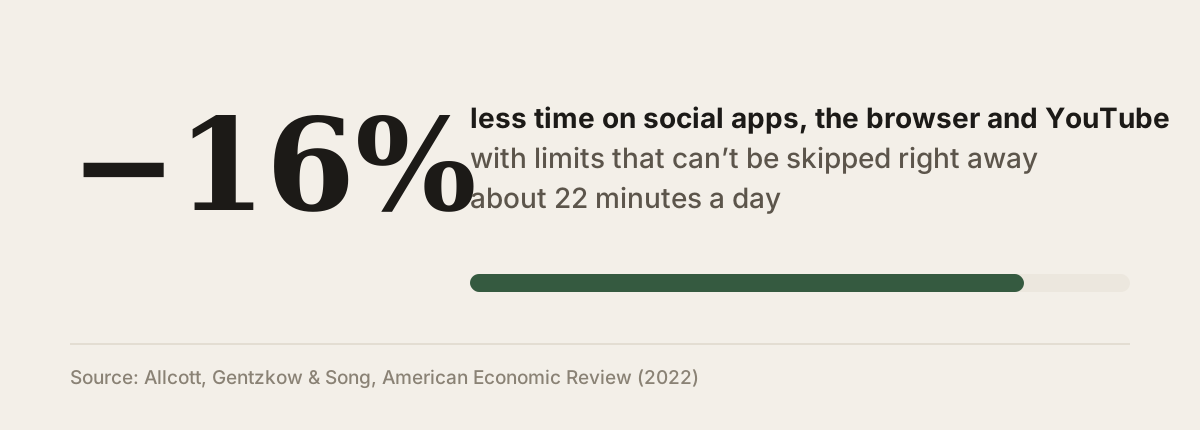
Yes, as long as you can't skip them with one tap. Limits you can dismiss instantly work more like reminders. In one study, limits that couldn't be overridden right away worked clearly better than flexible ones.
In that randomized study of about 2,000 adults, time on social apps, the browser and YouTube fell by 16%, about 22 minutes a day (Allcott, Gentzkow & Song, 2022). In practice: set a Screen Time passcode that you don't know yourself.
Do I have to delete social media to stop doomscrolling?
No. Usually it's enough to limit the endless parts and keep the people. Messages, group chats and Stories are rarely the problem; Reels, Shorts and For You feeds often are.
Our social media detox checklist shows how, along with the guides on Instagram Reels, YouTube Shorts and TikTok.
How does Feedbye help with doomscrolling?
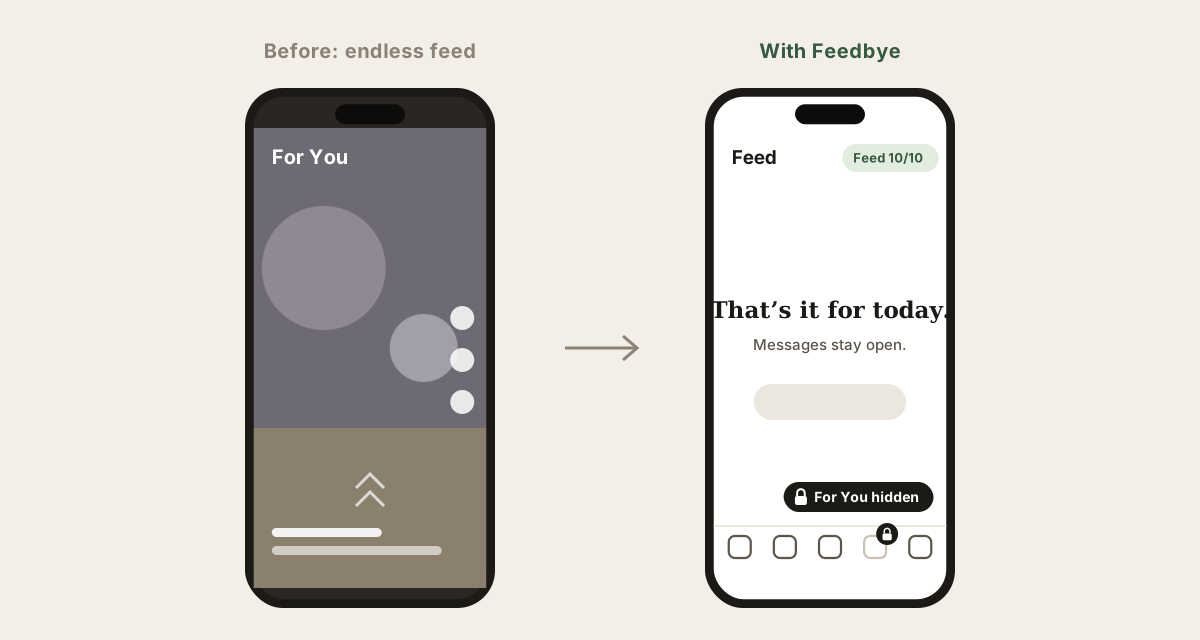
Feedbye gives your feeds an end. Reels, Shorts and For You feeds are hidden, and after a daily limit of feed posts, say 10, you're done for the day. Friends, messages and Stories stay.
The iPhone app works with Instagram, YouTube, TikTok, Threads, X and Facebook. Three exceptions a day cover the moments you really need one. You can block the original apps with Apple's Screen Time so you don't sneak back in, and Post Mode opens one for a few minutes when you want to post. There's a sleep mode for the evening, a focus timer for the day, and a hamster mascot whose energy rises when you stay under your limit. Feedbye is independent and not affiliated with Meta, Google, ByteDance or X.
Learn more about the idea behind Feedbye on the home page.